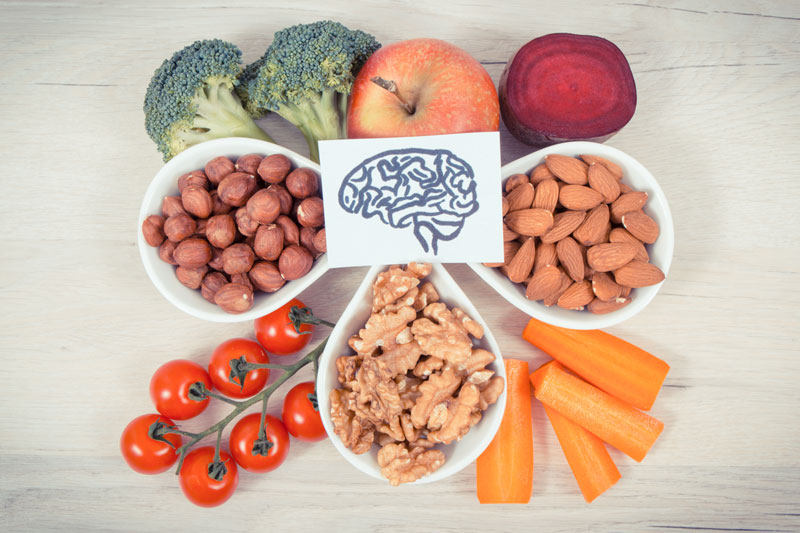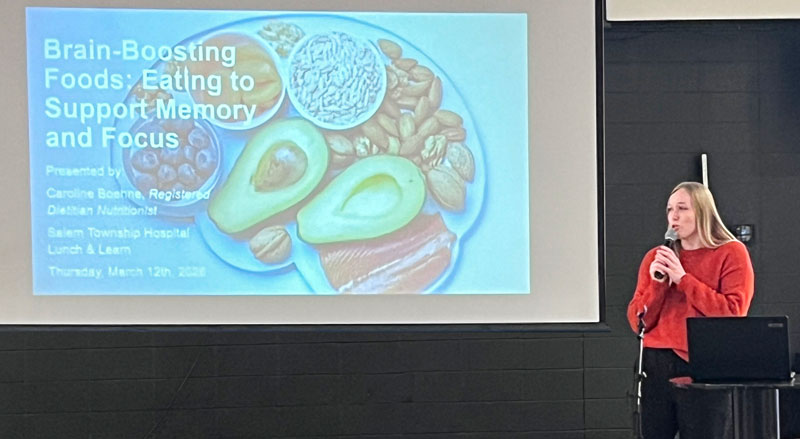
The March 2026 Lunch & Learn was presented by Registered Dietitian & Nutritionist, Carolin Boehne. She shared information on "Brain Boosting Foods and Eating to Support Memory."
Hydration: The Overlooked Brain Booster
Fun Facts About the Brain!
- The brain weighs 3 pounds! That’s about the weight of a half gallon of milk.
- One piece of brain tissue the size of a grain of sand contains 100,000 neurons and 1 billion synapses. There are approximately 100 billion neurons in the brain.
- For context, 1 billion seconds = 31.7 years
- Brain information can travel up to 350 miles per hour.
- The brain isn’t fully formed until the age of 25.
Steady Glucose: The Brain’s Main Fuel Source
Glucose, which comes from carbohydrates, is the brain’s main energy source. The brain cannot store a lot of energy at a time it depends on a steady supply.
What happens when the blood sugar drops?
- Brain fog, fatigue, difficulty concentrating, irritability.
The best strategy to regulate blood sugar levels is to eat balanced meals/snacks containing protein, fiber, and healthy fats!
Examples: Oatmeal and nuts, Whole grain toast and eggs, Brown rice paired with beans or chicken/fish
Healthy Fats: The Building Blocks of the Brain
Another fun fact: 60% of the brain’s solid matter is fat.
What happens without enough healthy fat?
- Brain cells don’t communicate as effectively
- Brain fog, confusion, lapse in memory
- Inflammation Increased risk for long term cognitive decline
Omega-3 fatty acids are key in supplying the brain with fat!
Fatty fish (salmon, tuna, sardines), Walnuts, Flaxseed/Chia seeds, Olive oil, Avocado
Antioxidants: Shields for the Brain Cells
The brain produces constantly produces energy, which creates oxidative stress (“wear and tear” on the brain cells)
Antioxidants help protect brain cells from this damage. Think of antioxidants as protection from rust on the brain!
Why does this matter?
Over time, oxidative stress can contribute to memory decline and cognitive aging.
Key antioxidant foods:
- Berries
- Dark and leafy greens (broccoli, spinach, arugula)
- Orange veggies (sweet potatoes, carrots)
- Green tea, dark chocolate
B Vitamins: Supporting Memory & Nerve Function
- B vitamins work in the production of neurotransmitters (brain messengers).
- B vitamins metabolize homocysteine (an amino acid).
- Lack of this process often leads to cognitive decline.
B vitamins include riboflavin (B2), pyridoxine (folate/folic acid (B9), and cobalamin (B12). Vitamin B12 absorption decreases with age.
Simply put, B vitamins help your brain send messages throughout your body clearly.
Vitamin B sources:
Eggs, Milk, yogurt, Meat, Fortified cereals, Beans and leafy greens
Hydration: The Overlooked Brain Booster
Fun fact: The brain is about 75% water.
Water is crucial for nutrient transport and energy production in brain cells.
Even mild dehydration of 2% can cause confusion, headaches, fatigue, and delayed thinking
Older adults are at higher risk of dehydration due to:
- Decreased thirst sensation, medication usage, and higher frequency of bathroom trips.
Practical hydration tips:
- Always keep water visible
- Drink water with medications (if possible)
- Herbal tea, fruits and veggies
- If you feel tired, foggy, or lethargic, try drinking water first.
Smart Brain Swaps
Breakfast Swaps
- Instead of sugary cereal, choose oatmeal with walnuts and berries
Instead of white toast with jelly, choose whole grain toast with peanut butter and/or an egg
Instead of a muffin or pastry, choose Greek yogurt and fruit
Lunch and Supper Swaps
Instead of fried fish or chicken, choose baked or grilled fish/salmon/chicken
Instead of a ham sandwich on white bread, choose a turkey sandwich on whole grain bread with spinach
Instead of a cream based soup, choose a bean or vegetable soup
Snack Swaps
- Instead of cookies, choose apple or banana slices with peanut butter
- Instead of a candy bar, choose dark chocolate (70% cocoa) and a handful of nuts
Drink Swaps
- Instead of soda, choose sparkling water with fruit or flavored sparkling water
- Instead of sweet tea, choose herbal tea
What is One Small Change You Can Try this Week?
- Adding berries to breakfast
- Swapping white bread for whole grain bread
- Choose a reusable water bottle to have around daily
- Include fish in your routine at least once/week.
- Ensuring there are at least 3 colors of the rainbow in your meal